



PPM‑Confirel: consolidating growth, preparing the next phase
Publish date: 15 December 2025 / Agriculture / Author : ATH Sokren
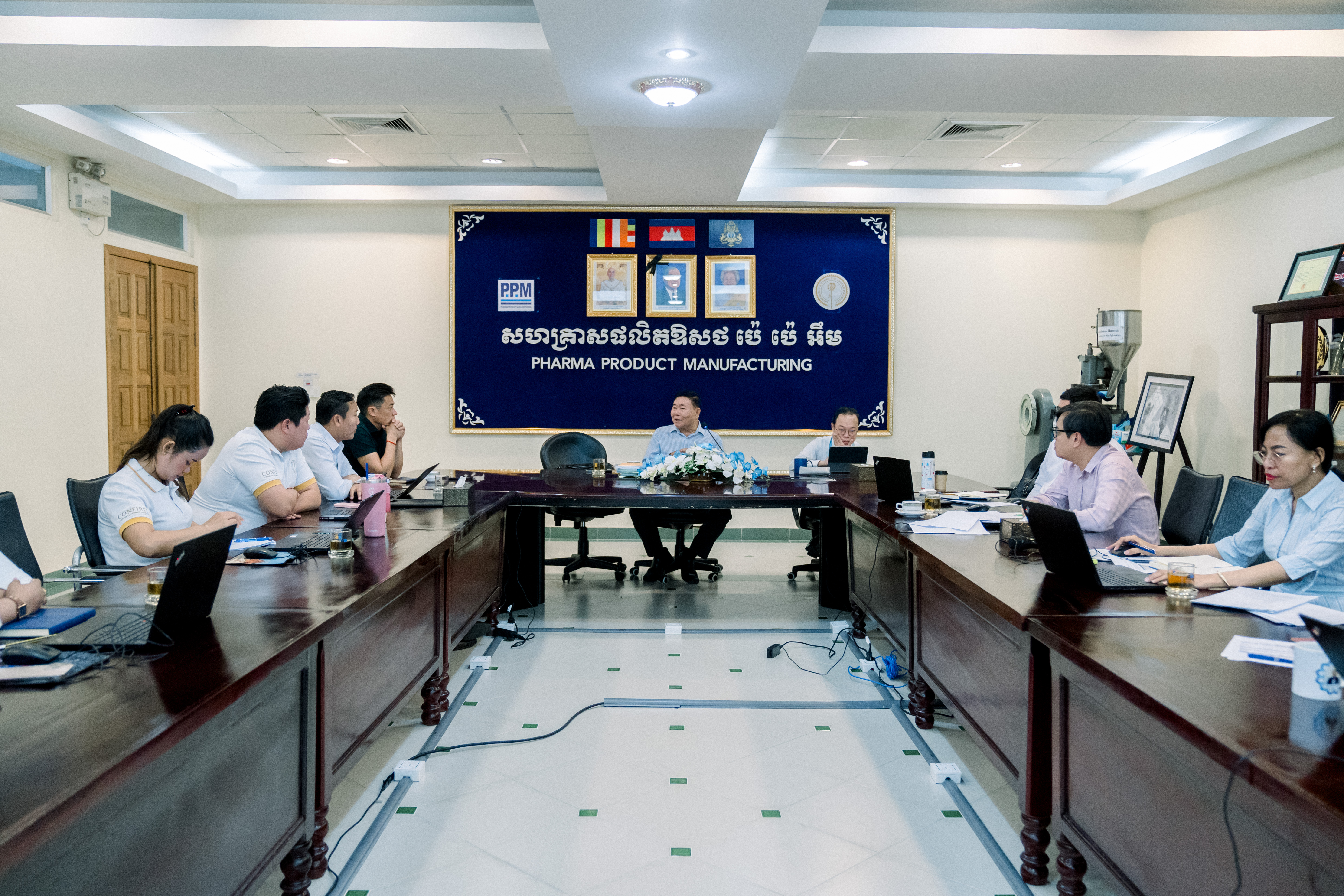
In the third quarter of 2025, the PPM‑Confirel group confirmed a solid growth dynamic, driven both by its pharmaceutical activities and by the valorization of Cambodian agri‑food products. Under the leadership of Dr Hay Ly Eang, the Executive Committee drew the main lessons from a year marked by the rise in domestic sales, the continued growth of exports and the upgrading of the organization.
On the PPM side, pharmaceutical sales in Cambodia recorded double‑digit growth compared with last year, with a particularly sharp increase in core portfolio products. The full integration of a large range under an international license has reinforced this trend, while some partner lines have led to a prudent readjustment of future targets. The commercial strategy is shifting towards greater specialization: abandoning the generalist sales‑force model in favor of brand “clusters”, supported by dedicated medical promotion teams, and scaling up the network of partner pharmacies, which is expected to multiply in the coming years.
In foreign markets, PPM’s ANF activity is growing at a rate well above that of the market, with a strengthened position in several West African countries. The laboratory is climbing national rankings, now occupying leading positions in key markets where its flagship brands – particularly in analgesia, ENT, gynecology and nutrition – are becoming references. The stated ambition is to join the circle of leading regional players by 2030, by refining a country‑by‑country strategy to decide where to invest, where to maintain efforts and where to withdraw.
For Confirel, domestic sales are rising, driven by modern trade, showrooms and new product concepts. Exports are also increasing in volume, with double‑digit growth in Confirel ranges and a customer base that is diversifying in Australia, New Zealand and Europe.
At the heart of this transformation, artificial intelligence plays an increasing role. Deployed for several years, it no longer serves only to automate tasks, but also to inform decision‑making: detailed analysis of product portfolios, identification of bottlenecks, mapping of internal skills. However, management emphasizes the need for a “dialogue” between teams and these tools, in order to contextualize recommendations and avoid diagnostic errors.
In the background, Dr Hay Ly Eang’s message remains consistent: demand exists, in Cambodia as well as internationally, but the competitive advantage now depends on the ability to strengthen the organization, secure production and execute decisions rapidly. In an environment where competitors are moving fast, PPM‑Confirel has no intention of resting on its laurels.
